
Before surgery
Your diagnosis
Femoroacetabular impingement (FAI)
- Abnormal contact between the ball of the hip (femoral head) and the rim of the socket (acetabulum), which damages the cartilage lining, the labrum, or both.
- It is caused by an abnormal shape of the ball, the socket, or both. Repeated hip motion increases the contact.
- It affects all ages, from the early teens through adult life, and is increasingly recognized as a cause of hip arthritis.
- Arthroscopy reshapes the socket and/or the ball to stop the impingement. It aims to relieve pain and lower the risk of arthritis, but does not eliminate it.
Labral tear
- The labrum is a ring of cartilage around the socket. It can be partly damaged or torn.
- Tears are usually linked to FAI, but can also come from dysplasia, injury or overuse.
- During arthroscopy the labrum is repaired, or sometimes the damaged tissue is removed (debrided). Occasionally it is reconstructed with a graft.
- MRI or CT usually, but not always, shows a labral tear.
Hip dysplasia
- A shallow socket. Some force normally carried by the socket shifts onto the labrum, which can tear it.
- In mild or borderline dysplasia, repairing the labrum can relieve pain, but arthroscopy does not deepen the socket or remove the higher risk of arthritis.
- In advanced dysplasia, a larger reconstruction such as a periacetabular osteotomy (PAO) can increase coverage.
- Dysplasia and impingement are opposite ends of a spectrum: under-coverage versus over-coverage. Ask Dr. Gombera if you are unsure of your diagnosis.
Why surgery, and the alternatives
- Surgery is recommended for persistent pain that interferes with daily life, work or sport and has not improved with conservative treatment.
- Alternatives range from no treatment to physical therapy, medication or injections. These can be arranged if you prefer.
How impingement works
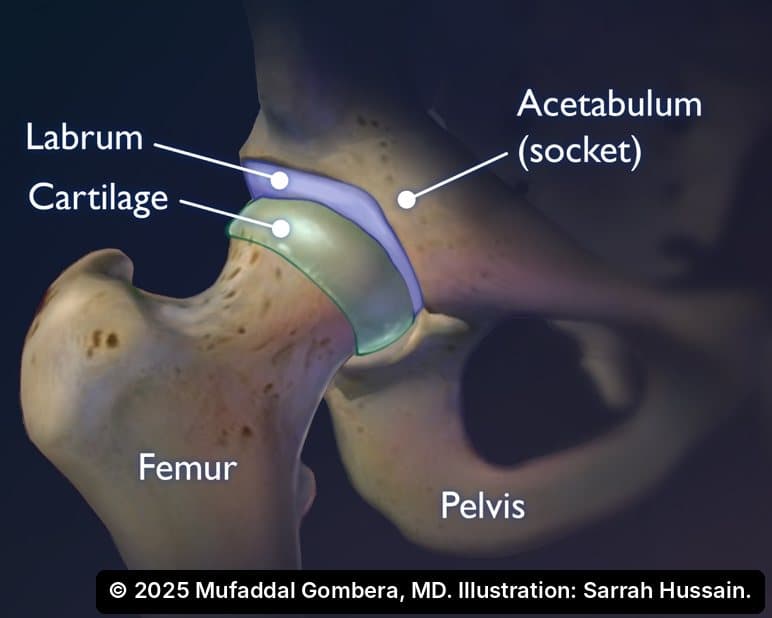
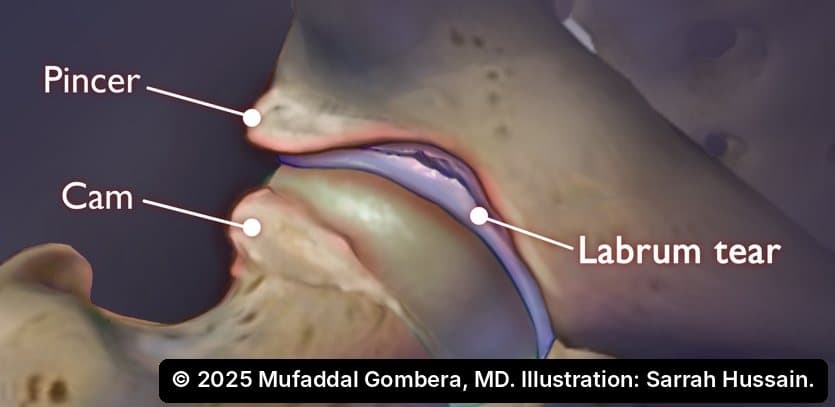
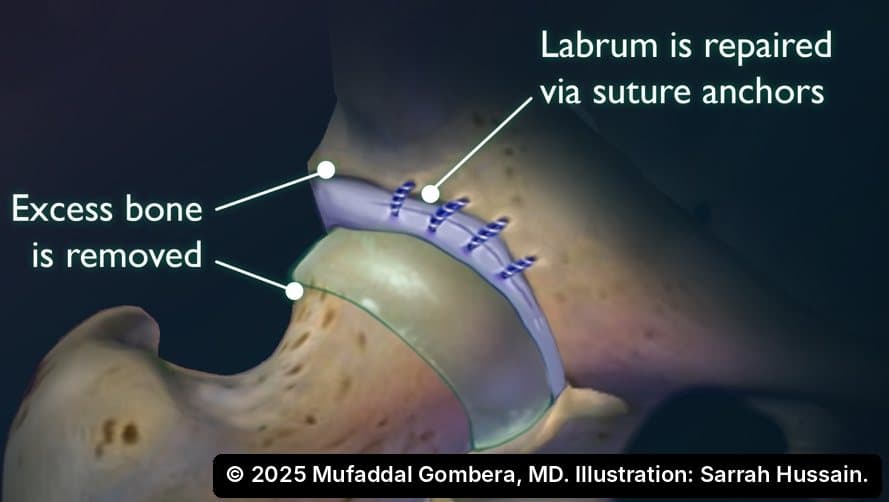
Illustrations © 2025 Mufaddal Gombera, MD, by Sarrah Hussain. All rights reserved. Do not copy or reuse without written permission.
See it in real surgery
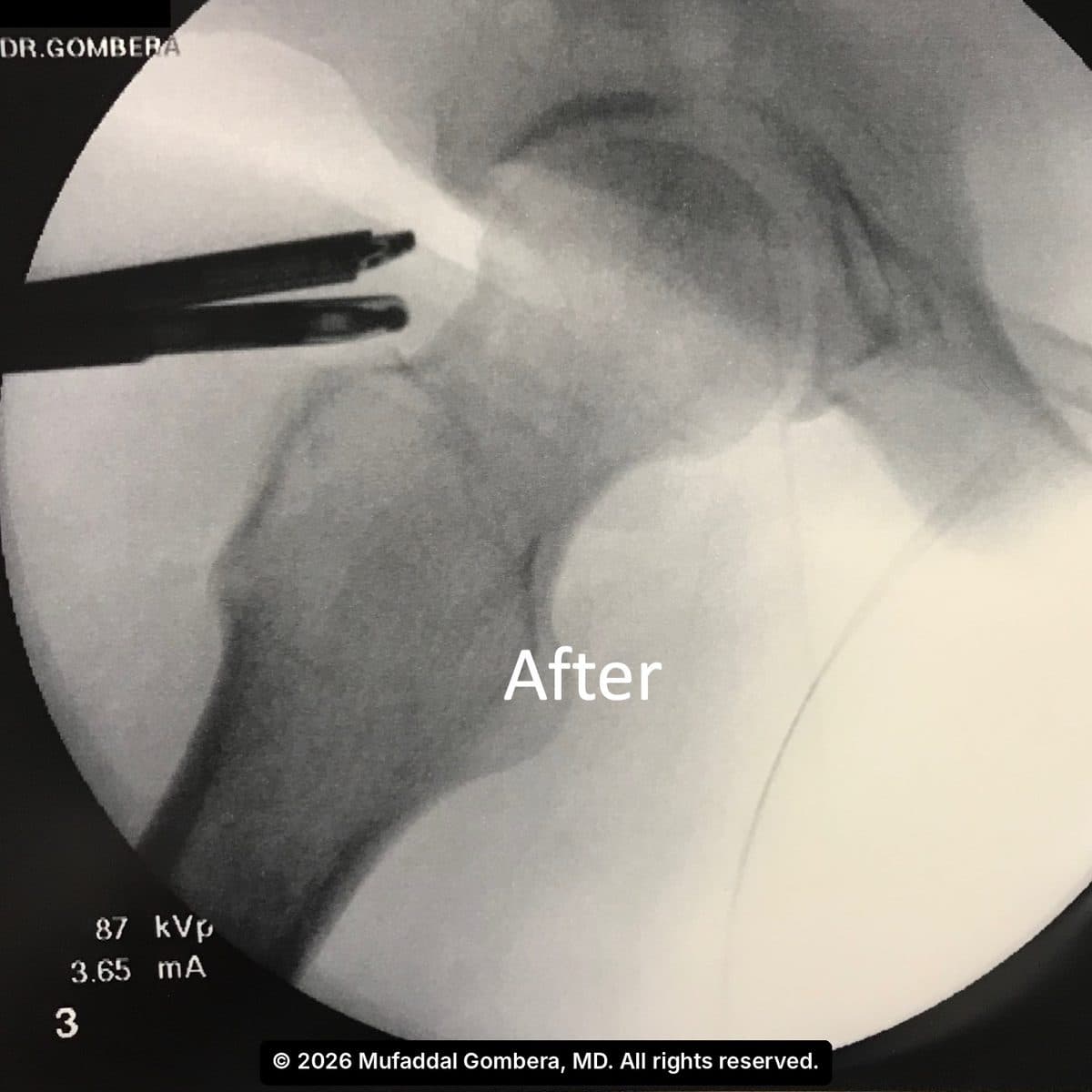
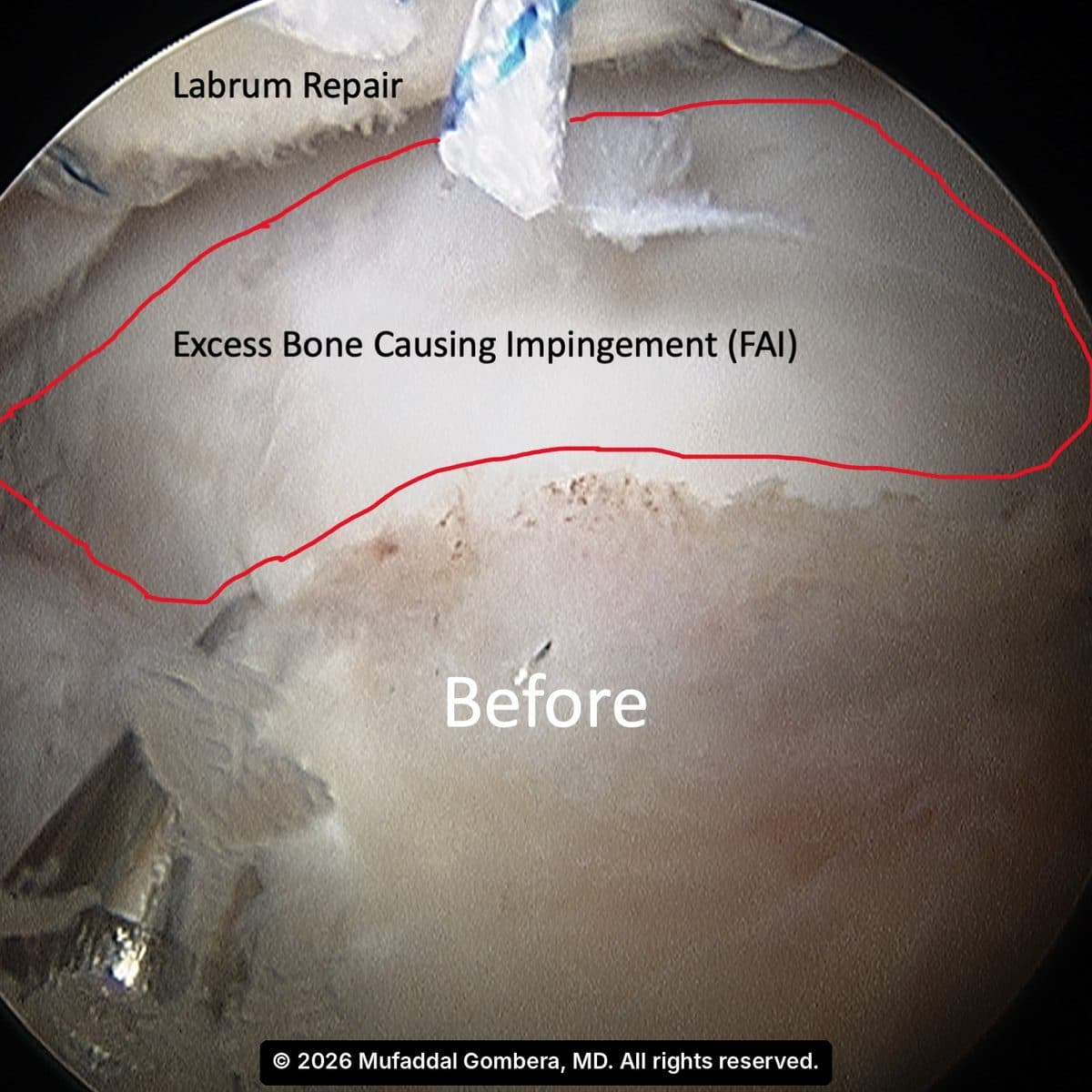
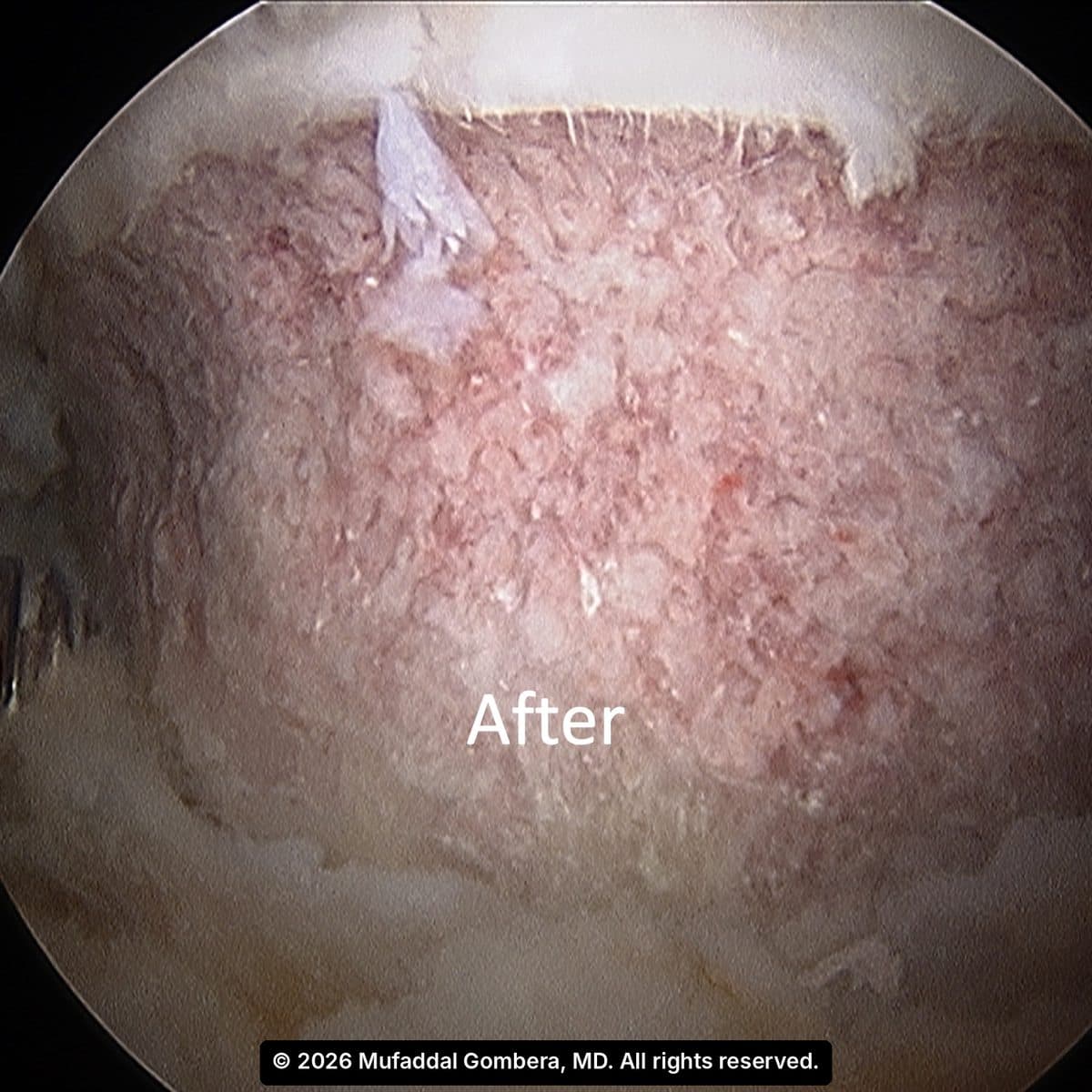
Images from Dr. Gombera's own surgery, with identifying details removed. They show a cam bump before and after it is reshaped.
X-ray during surgery
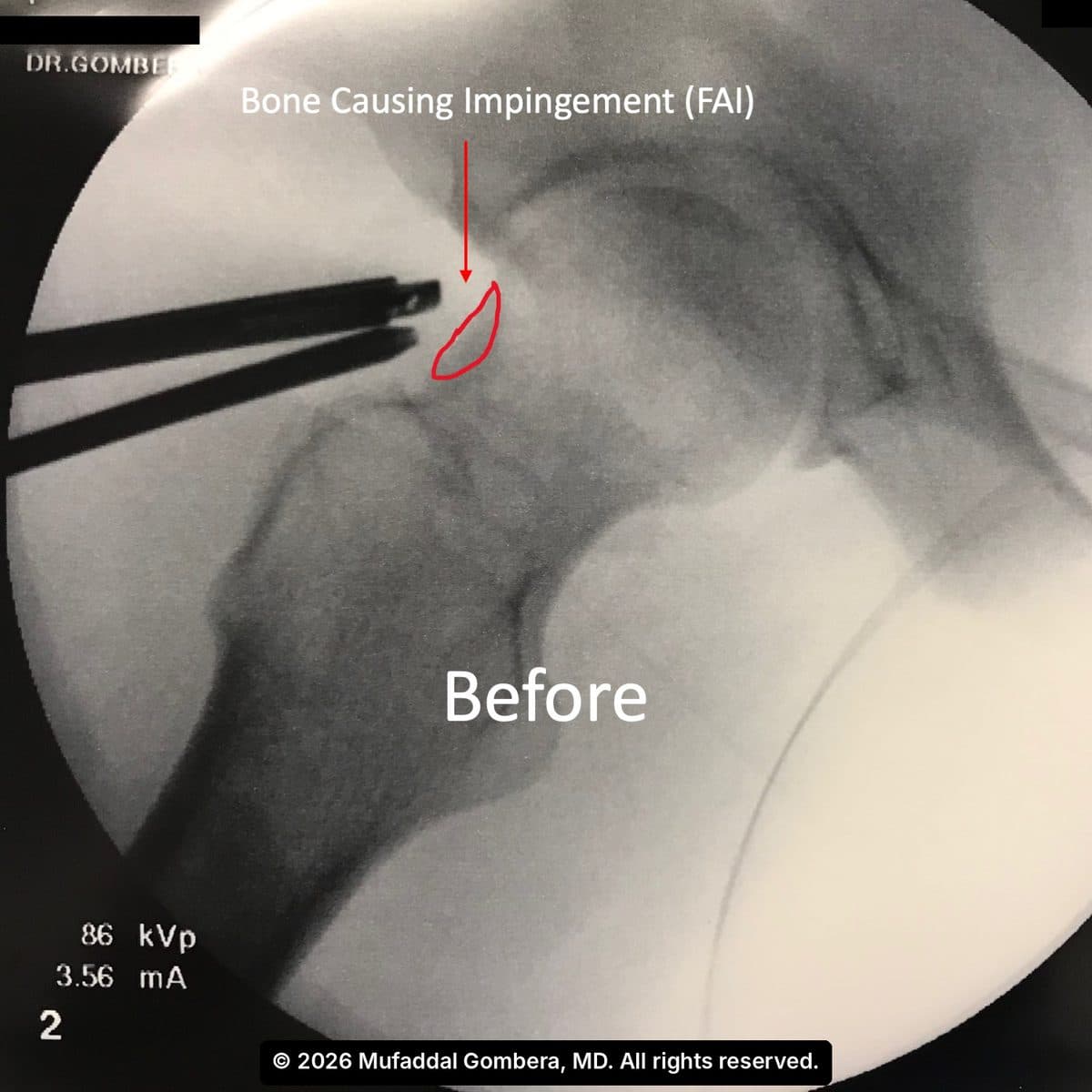
Through the arthroscope
Images © 2026 Mufaddal Gombera, MD. All rights reserved. Do not copy or reuse without written permission.
Know the numbers
- Success rate
- 85 to 90%
- Pain resolved
- 80%
- 15% the same, 5% worse
- Major complication
- <1 in 1,000
- Full recovery
- 6 to 9 mo
- Walking comfortably by 6 to 8 weeks for most (8 to 10 after a Glute Tendon Repair)
This surgery is successful about 85 to 90 percent of the time. It is most successful at relieving pain.
Returning to vigorous work or sport depends on the damage to your hip, how well it heals, how well you rehabilitate and how demanding your activity is.
The complication rate is low. The risk of a major complication is substantially less than 1 in 1,000. Most complications are temporary.
Full list of possible risks and complications
Possible complications include infection, fracture, increased pain, bleeding, nerve injury, abandoned procedure, blood clot in the leg or lung, impotence, instrument breakage, avascular necrosis of the femoral head, leakage of irrigation fluid, delayed wound healing, worsening symptoms, popping, labral re-tear, excess bone formation, arthritis, stiffness, need for further surgery, and the risks of anesthesia itself.
Dr. Gombera lists these to inform you, not to frighten you. Complications are rare, but they can happen, and you have a right to know.